Jamón Ibérico: The Spanish Delicacy
Spain is the land of Jamón. Considered as a national treasure, Jamón - dry-cured pork leg - is more than a delicacy in Spain; it is a normal part of every family’s life. With a production of more than 40 million hams a year, few meals pass by without at least a few slivers of jamón finding its way onto the table.
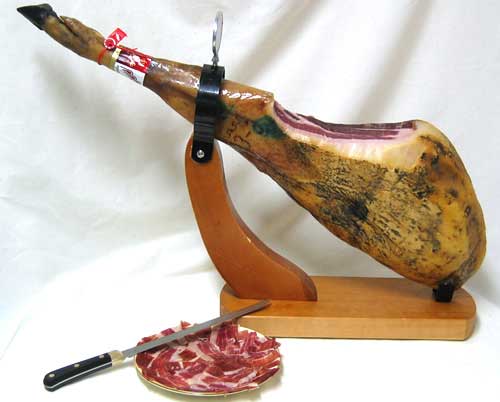
Nevertheless, Jamón is not only well known by its gastronomic virtues, but it’s also recognized as one of the healthiest products in the Spanish and Mediterranean diet: low-caloric, it lowers the “bad” choresterol and raises the “good” one. It’s rich in iron, magnesium, calcium, vitamins B1 B2 and it is a powerful antioxidant, thanks to its vitamin E.
One of the most important things to know when selecting a Spanish Jamón, is that the level of
quality can be judged by the following parameters: type of pig, diet, the part of the pig used and the way it is cured. According to it, we can find the two categories:
- Jamón Ibérico (Bellota, Recebo, Campo and Cebo)
- Jamón Serrano
The main difference strives in the type of pork and diet: while Serrano hams are made from white pig and are compound-fed, Jamón Iberico is made from high-quality Iberian pigs and fed with either acorn (Bellota), compound (Cebo) or a mixture (Recebo).
Although Ibérico hams are the most highly regarded and valued hams, Serrano is also more than respectable. Besides, due to the low production of Ibérico (only around 5% of the total production), Jamón Serrano is the most common ham in the habitual meals.
The standards of production of Spanish hams are regulated by the Protected Designation of Origin laws, being Huelva DO, Teruel DO, Guijuelo DO, Dehesa de Extremadura DO and Los Pedroches DO the most renowned ones.
“If you were to sit down and write a list of the greatest foods on earth,
Jamon Iberico de Bellota would have to be near the top”
S. Majumdar best seller of food memoir, Eat My Globe.
